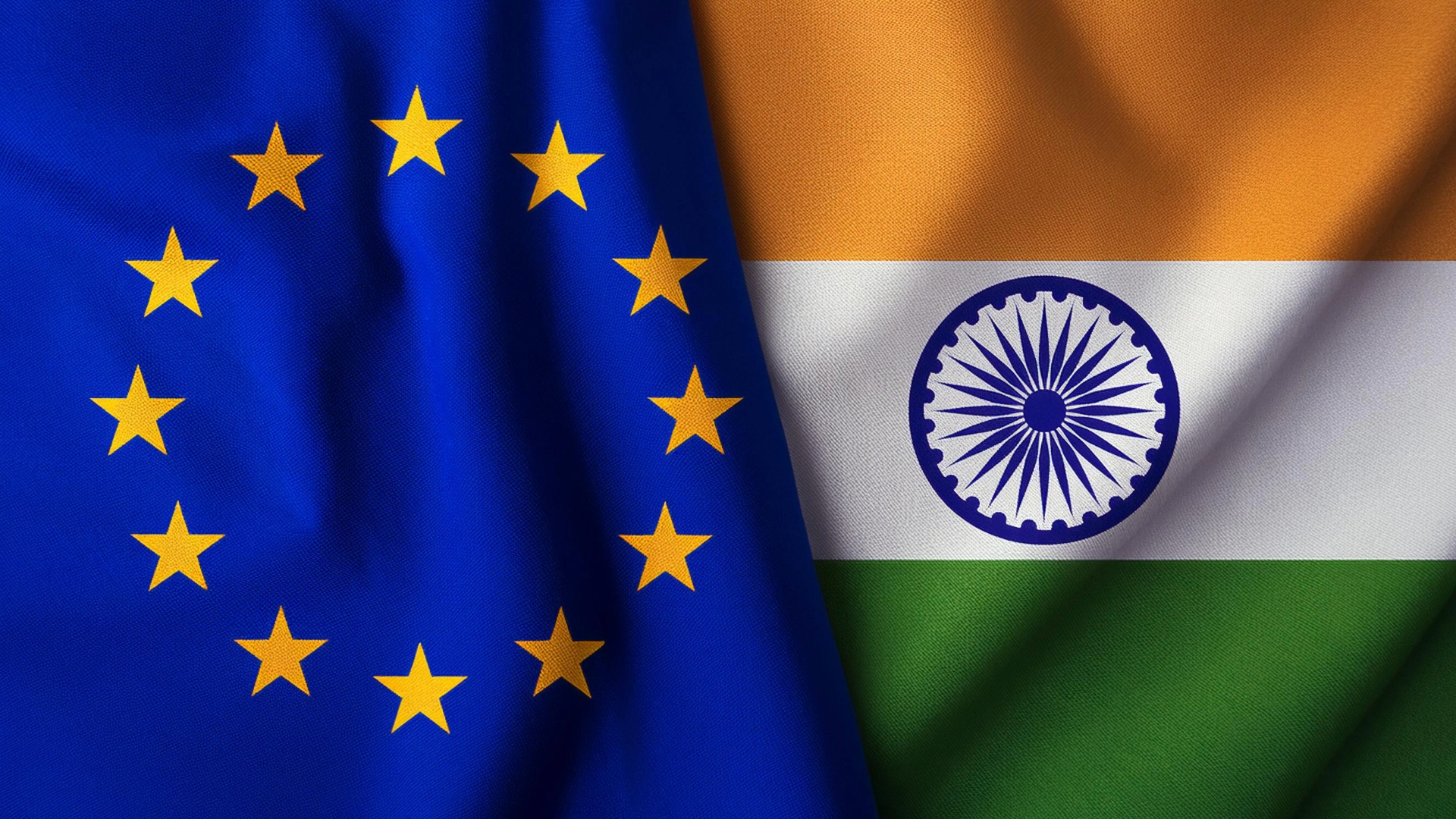
As of January 1, 2026, the global trade landscape for carbon-intensive industries has fundamentally shifted [1] [2]. The European Union’s Carbon Border Adjustment Mechanism (CBAM) has officially transitioned from its preliminary reporting phase to a payment-linked definitive stage, marking the start of a new trade regime that places a levy on the carbon embedded in imports [1] [2] [3]. For Indian exporters of steel, iron, aluminium, cement, and fertilisers, this is no longer a matter of administrative compliance but a critical commercial factor in pricing and market access[1] [2].
The Economic Reality of Carbon Costs
While EU-based importers are technically responsible for purchasing and surrendering CBAM certificates, the economic burden is expected to fall squarely on Indian exporters [1] [2] [4]. Market experts indicate that Indian firms may need to reduce realised prices by 15–22% to remain competitive as EU buyers factor carbon costs into their procurement margins [1]
Estimates from the Global Trade Research Initiative (GTRI) and the Centre for Science and Environment (CSE) suggest that affected Indian exports could face an average additional tax burden of roughly 25% [2]. The impact is particularly severe in sectors like cement, where carbon costs could potentially double the price of the commodity by 2034 [4]. In the steel sector, the cost of carbon is already becoming a "hot potato" in negotiations between traders and supplier [[4].
The Data Challenge: Actual vs. Default Emissions
A critical risk highlighted in recent reports is the "asymmetry" of emissions accounting. CBAM is a plant-level regime; generic corporate averages or ESG disclosures are no longer sufficient [3][1][[4].
- The Default Value Penalty: Without verified plant-level data, EU authorities apply "default values". For Indian steel, this could result in a punitive premium of approximately €300 per ton, potentially outpricing exporters from the European market entirely [1][[4].
- Verification Rigour: From 2026, independent verification of emissions data is mandatory, and only EU-recognised or ISO 14065-compliant verifiers will be accepted [1][3].
- Traceability: Exporters of "complex goods" must now trace embedded emissions across multi-tiered supply chains, including upstream precursors, which presents a significant technical hurdle [3].
The MSME Crisis and Supply Chain Exclusion
Micro, small, and medium enterprises (MSMEs) are the most vulnerable to this transition. These firms often lack the technical capacity for complex carbon accounting and the financial resources to invest in low-carbon production. A major concern is that large producers often do not share plant-level emissions data with the MSMEs that source raw materials from them. Without this data, MSMEs are forced to use high default values, sharply inflating their costs and accelerating their potential exit from EU supply chains [1][3][[4].
Strategic Responses: Policy and Financial Hedging
To mitigate these risks, Indian stakeholders are exploring domestic and financial pathways:
- Domestic Carbon Pricing: Experts advocate for strengthening India’s Carbon Credit Trading Scheme (CCTS) to establish an "effectively paid carbon price". Under Article 9 of the CBAM regulation, carbon prices paid in third countries can be deducted from the EU liability [3][[4].
- Export Taxation: Proposals have emerged for India to introduce a domestic carbon tax on CBAM-covered exports to ensure revenue remains within Indian jurisdiction rather than being collected by the EU [3] .
- Financial Hedging: Sophisticated exporters are turning to "virtual CBAM certificates". These instruments allow exporters to lock in carbon prices (currently around €72–€90 per tonne) to protect profit margins against the volatility of the EU Emissions Trading System (ETS) [2][[4].
- Contractual Shifts: Companies are already being compelled to renegotiate contracts to include traceability obligations and carbon-adjusted pricing [3][[4].
Diplomatic and Political Friction
The implementation of CBAM remains a point of significant contention in international forums. India has raised concerns at the World Trade Organization (WTO) at least 29 times, viewing the mechanism as a non-tariff trade barrier that undermines the principle of Common But Differentiated Responsibilities (CBDR-RC) [3]. Critics argue that CBAM unfairly penalises developing economies by imposing uniform standards without accounting for historical emissions or technological disparities [2][3].
Looking Ahead
The consensus among experts is that CBAM is permanent and likely to expand [[4]. It is expected to grow "vertically" to cover more downstream products and "horizontally" as other nations like the UK (planned for 2027), the US, and Australia consider similar border adjustments [2][3][[4]. For Indian business leaders, the priority is clear: structural preparation through education, decarbonisation, and robust MRV systems is the only way to safeguard long-term competitiveness in a carbon-constrained global market [3][[4].
References
- Global Trade Research Initiative (GTRI), "CBAM impact: Carbon cost hits Indian steel and aluminium exports from Jan 1," The Times of India, Dec 31, 2025.
- "EU carbon border tax comes into force, raising costs for Indian exporters," Down To Earth, Jan 02, 2026.
- Singh, H., Sharma, A., & Chaturvedi, V., EU Carbon Border Adjustment Mechanism: Dominant Perspectives in India, Council on Energy, Environment and Water (CEEW), Oct 15, 2025.
- Carbon Mandal, "Who Really Pays for #CBAM? The cost of Carbon Borders," YouTube Podcast with Dan Malleski, 2026.
Add a Comment
Your email address will not be published. Required fields are marked *